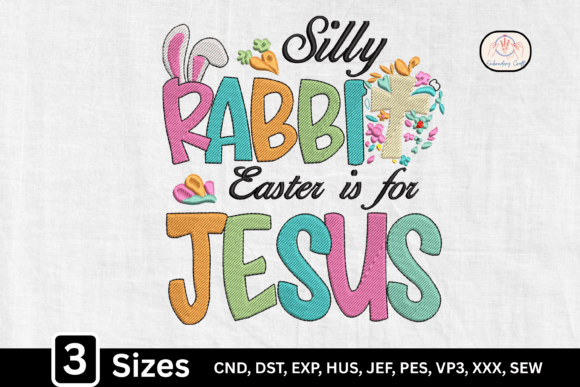
Silly Rabbit Easter Is for Jesus
First Impression: Cheerful, Faith-Filled & Instantly Relatable
As an embroidery designer who’s prepped over 200 craft fair booths—and watched thousands of shoppers pause, smile, and reach for a product—I can tell you Silly Rabbit Easter Is for Jesus lands with warmth and wit. It’s not stiff or sermon-heavy; it’s playful but purposeful—think “farmhouse charm meets Sunday school joy.” The title alone sparks recognition: customers get the gentle nudge toward Christ-centered celebration before they even read the full phrase. That balance—funny enough for kids, reverent enough for grandparents—is rare in Easter embroidery files. It feels handmade, not mass-produced, and carries emotional resonance without needing explanation.
Where It Shines on Craft Fair Products
Tote bags: A standout. Positioned front-and-center on a natural canvas or oatmeal linen tote, Silly Rabbit Easter Is for Jesus reads clearly from six feet away. Its rhythm—short phrase, strong cadence—works beautifully at 4–5 inches wide. No crowding, no ambiguity.
Aprons and tea towel embroidery: Perfect for kitchen-focused booths. On a denim apron pocket or folded tea towel corner, it adds personality without overwhelming. The phrase flows naturally across horizontal surfaces—no awkward line breaks or cramped spacing.
Embroidered patches and fabric pouches: This design scales down surprisingly well as a 2.5-inch patch. The words retain legibility, especially if stitched with high-contrast thread (e.g., navy on cream). Small pouches become giftable keepsakes—ideal for Easter baskets or boutique gift sets.
Pillow covers and market bags: As a large focal design (6–7 inches), it anchors a neutral linen pillow or jute market bag with intentionality. It doesn’t shout—it invites conversation. Buyers often say, *“I love that message—and I love how it looks.”*
Caps and curved surfaces: Use caution here. The phrase’s length makes center-front cap placement tricky unless resized to ~3.25 inches. Test hoop placement and stitch density on scrap twill first—curves distort letter spacing if the file isn’t optimized for low-profile stitching.
What Makes It Sell—Beyond the Message
Silly Rabbit Easter Is for Jesus works because it’s instantly understandable, photograph-ready, and emotionally sticky. At a craft fair, attention spans are short and signage is loud—this design cuts through noise with clarity and kindness. It photographs exceptionally well for Etsy listings: clean background, soft lighting, and natural fabric textures make the thread colors pop without editing. As a digital embroidery file, it supports batch production—consistent spacing, balanced word weight, and logical stitch order mean fewer stops mid-hooping.
It also strengthens brand consistency. If your small shop leans into faith-based, family-friendly, or seasonal handmade products, this design becomes a signature—not just for Easter, but as part of a broader collection (think matching “He Is Risen” or “Bless This Nest” companion files).
Careful-Use Notes Every Embroiderer Should Know
- Dense stitch areas: Watch the “Rabbit” and “Jesus” letterforms—they may carry heavier fill or satin stitches. On textured tea towels or thick canvas, test stabilizer layers (cutaway + tear-away combo often wins).
- Small lettering: Avoid shrinking below 2 inches wide. The lowercase “i”s and “l”s can blur on dark fabric or low-thread-count cotton. Always check readability on your target base fabric.
- Dark fabric: Use bright white or ecru thread—not off-white—for maximum contrast. Lighter thread shades disappear too easily on navy or charcoal.
- Fabric texture: Highly napped fabrics (like terry cloth or bouclé) swallow fine details. Stick to smooth-weave cotton, linen, or medium-weight denim for best results.
- Hoop size & file prep: Confirm the embroidery file’s recommended hoop size before cutting batches. Oversized hoops create tension issues on small items like patches or pouches.
Design Strengths That Boost Booth Impact
At a weekend craft fair, visual appeal drives impulse buys—and Silly Rabbit Easter Is for Jesus delivers. Its layout encourages eye movement left-to-right, guiding attention naturally. It elevates perceived value: customers associate clear, well-spaced embroidery with quality craftsmanship, not rushed production. When paired with thoughtful product choices (e.g., a linen tea towel + matching embroidered pouch), it signals intentionality—a key differentiator among handmade product displays.
Buyer engagement rises when messaging aligns with identity. Moms grab the tote. Grandmas point to the pillow. Church volunteers ask about bulk patch orders. That’s not luck—it’s smart design curation.
Practical Embroidery Designer Notes Before You Stitch
- Test the design on scrap fabric matching your final product’s weight and weave.
- Check thread contrast across all intended fabric colors—especially black, navy, and heather grey.
- Review letter spacing and kerning in your embroidery software. Adjust if “Silly Rabbit” feels cramped or “for Jesus” floats too far.
- Confirm hoop size compatibility with your smallest and largest intended items.
- Inspect stitch density—high-density fills need stronger stabilizer support on lightweight fabrics.
- Use appropriate stabilizer: cutaway for knits, tear-away for stable wovens, fusible for delicate linens.
- Create at least one real mockup—not just a printable mockup—to assess drape, texture interaction, and true-to-life scale.
- Compare thread colors across multiple fabric swatches. What reads warm on ivory may look muddy on oatmeal.
- Verify commercial licensing terms before selling finished products—this is essential for Etsy sellers and small shop owners producing for resale.
Final Thought: A Design That Earns Its Place
Silly Rabbit Easter Is for Jesus isn’t just another Easter embroidery file—it’s a conversation starter, a values-aligned product anchor, and a reliable seller across categories. It respects the craft, honors the season, and connects with buyers on human terms. For embroidery business owners preparing for spring markets, this design earns its spot front-and-center—not because it’s trendy, but because it’s true, usable, and quietly unforgettable.