Christmassy Robin Embroidery Review
First Impression: Classic Charm with Commercial Appeal
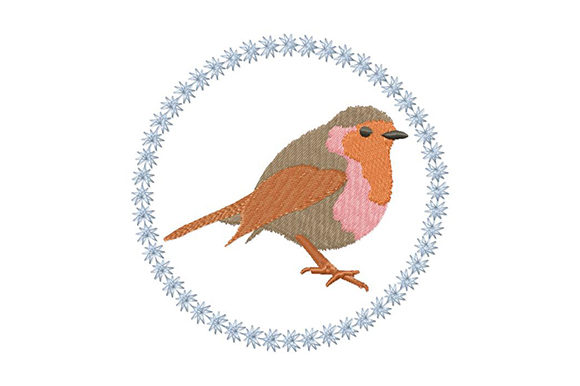
As an embroidery designer who’s developed hundreds of designs for small businesses—from artisanal bakeries to indie florists—I immediately recognize Christmassy Robin as a design rooted in tradition but built for modern brand use. The title signals clear seasonal intent and cultural resonance—robins are deeply tied to English Christmas heritage, evoking warmth, nostalgia, and approachability. It doesn’t feel overly ornate or cartoonish; instead, it strikes a balance between friendly and refined—ideal for brands that value handmade authenticity without sacrificing professionalism.
Real-World Business Applications
Christmassy Robin works exceptionally well across multiple commercial embroidery touchpoints. For cafés and boutiques, it’s perfect as a chest patch on staff aprons or work shirts—small enough to read at arm’s length, distinctive enough to reinforce seasonal identity. As a cap embroidery piece, it reads cleanly on the front panel when digitized with balanced stitch density and clean outlines. On tote bags and reusable gift wraps, it adds festive polish without overwhelming the product. For Etsy sellers and handmade brands, Christmassy Robin serves double duty: as a subtle sleeve accent on limited-run holiday apparel and as a branded patch sewn onto packaging—elevating unboxing into a tactile brand moment.
Florists and pet brands have successfully used Christmassy Robin as a small embroidered label on gift tags and pet bandanas—its symbolic warmth aligns beautifully with care-driven messaging. Creative studios use it in combination with minimalist typography on studio-branded notebooks or canvas pouches, where its illustrative quality stands out against neutral backgrounds.
Where to Use Christmassy Robin Thoughtfully
Like any machine embroidery design, Christmassy Robin shines brightest when matched to the right context—and requires thoughtful adaptation for certain applications. Avoid placing it on curved surfaces like baseball cap crowns unless the digitization accounts for stretch and distortion. On dark uniforms (navy, charcoal, black), confirm thread color contrast—especially in fine details like feather texture or beak definition—before finalizing your embroidery file.
For patches under 2 inches tall, test scalability early: intricate feather layering or tight internal outlines may lose clarity at smaller sizes. If your small business merch includes high-wash items (like café aprons or bakery towels), verify that stitch density allows for durability—overly dense fills can stiffen fabric and crack after repeated laundering. Also consider fabric texture: on heavy linen or tweed, stabilizer choice becomes critical—lightweight cutaway or tear-away blends often yield cleaner results than fusible alone.
Brand Identity & Customer Perception
When integrated intentionally, Christmassy Robin strengthens brand identity—not by shouting “Christmas,” but by whispering *craft, care, and continuity*. Customers subconsciously associate well-executed embroidery with attention to detail and product integrity. A thoughtfully placed robin patch on a local florist’s holiday bouquet wrap tells customers: “This isn’t mass-produced—it’s made with intention.” That perception lifts perceived value, supports premium pricing, and deepens emotional connection—especially during gifting seasons.
For digital embroidery file buyers, consistency matters: ensure Christmassy Robin visually harmonizes with your existing design assets—logo lockups, font pairings, and color palettes. If your brand leans modern-minimal, pair it with clean sans-serif text and generous negative space. If rustic-handmade is your lane, let it shine solo on natural canvas or organic cotton.
Practical Designer Notes for Small Business Use
Before committing to production, follow these proven steps:
- Test your Christmassy Robin embroidery file in black and white first—this reveals contrast issues invisible in color previews.
- Check legibility at your target patch size: print a 1:1 scale mockup and hold it at typical viewing distance (e.g., 24 inches for tote bags, 12 inches for cap fronts).
- Review thread color recommendations—if none are provided, prioritize matte polyester threads for soft hand-feel and fade resistance.
- Inspect spacing between elements: tight gaps between wing and body may close up on knit fabrics without proper underlay.
- Confirm hoop size compatibility—some versions may require larger hoops unsuitable for small-cap embroidery machines.
- Always test-stitch on your actual garment fabric with the same stabilizer you’ll use in bulk production.
- Create a printable mockup for client approval—this avoids costly re-runs and builds trust before stitching begins.
- Compare Christmassy Robin beside your other seasonal or permanent design assets—does it support visual rhythm? Does it stand apart without clashing?
- Verify commercial licensing—since this is intended for small business merch, ensure your purchase grants rights for resale, promotional use, and branded product labeling.
Final Thoughts for Embroidery Shops & Merch Creators
Christmassy Robin isn’t just another holiday motif—it’s a versatile, culturally grounded asset ready to elevate custom apparel, embroidered patch programs, and boutique merchandise. Its strength lies in adaptability: it can anchor a full holiday collection or serve as a quiet signature on a single apron pocket. For embroidery shops, it’s a reliable upsell—clients love recognizable symbols with storytelling weight. For Etsy sellers and crafters, it adds instant seasonal relevance without requiring custom illustration investment.
Remember: the most successful small business merch doesn’t just look festive—it feels intentional. When you choose Christmassy Robin, you’re choosing a design that carries heritage, invites warmth, and performs reliably across real-world substrates and use cases. Just digitize wisely, stabilize appropriately, and always—always—test before you commit.