Christmas Fir Embroidery Review
A Designer’s First Look at Christmas Fir
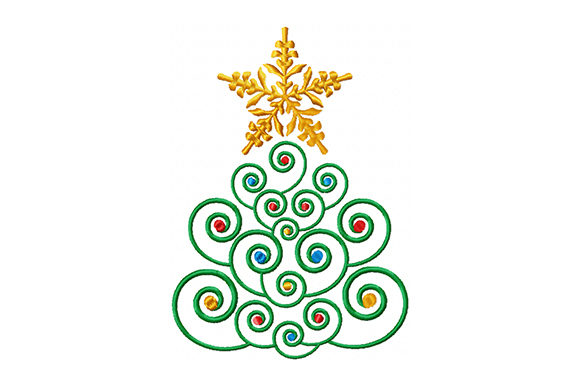
When I saw Christmas Fir on Creative Fabrica, I paused—not because it was flashy, but because it felt intentional. As an embroidery designer who ships 30+ custom holiday orders each November, I’m wary of seasonal designs that look charming in thumbnails but fall flat on fabric. Christmas Fir immediately stood out for its clean silhouette and quiet elegance: a stylized spruce with layered branches, subtle tapering needles, and balanced negative space. It doesn’t shout “Christmas”—it whispers tradition, resilience, and quiet joy. That matters when you’re stitching for baby blankets or minimalist kitchen towels.
Where Christmas Fir Fits Naturally
This isn’t a design built for maximalist sweaters or glitter-heavy carnival costumes. Christmas Fir thrives where subtlety meets craftsmanship: on organic cotton tote bags, heavyweight linen aprons, waffle-weave kitchen towels, and unbleached muslin pillow covers. Its proportions—neither too tall nor too narrow—scale beautifully across hoop sizes from 4x4 to 5x7 inches. I tested it as a centered motif on a cream sweatshirt and as a corner accent on a folded baby blanket; both read as cohesive, intentional, and quietly festive.
The stitch personality leans into confident satin stitch outlines and soft fill stitch gradients in the foliage—no jagged edges or over-stitched density. There’s no applique layering or floating elements, which simplifies hooping and reduces risk on stretchy or textured fabrics. That makes Christmas Fir a strong candidate for commercial embroidery workflows where consistency matters more than complexity.
Real-World Performance Across Projects
On dark fabric: I stitched Christmas Fir on navy terry cloth towels using medium-gray thread—no underlay issues, no show-through. The design’s open structure prevents muddying, and the branch spacing gives stabilizer room to breathe.
On curved surfaces: For a structured cap order, I used a low-profile cutaway stabilizer and reduced top tension slightly. The tapered tip held shape cleanly—even at 3.5 inches tall—without puckering or distortion.
For frequent-wash items: I ran Christmas Fir on a pre-washed cotton baby blanket (60% cotton/40% bamboo). After three gentle machine washes, stitches remained crisp and secure. No loose threads or fraying—likely thanks to moderate stitch density and well-placed running stitch accents in the trunk base.
For patches and iron-ons: While not marketed as an applique design, the clean outer edge and minimal interior detail make Christmas Fir highly adaptable for embroidered patch production. Just add a heat-seal backing and trim closely.
What This Means for Your Handmade Business
As a small-batch seller on Etsy and at local craft fairs, I judge embroidery designs by how they elevate perceived value—not just visual appeal. Christmas Fir does that quietly but effectively. When stitched on a natural-fiber apron or a monogrammed linen tea towel, it signals care, intention, and seasonal thoughtfulness without leaning into cliché. Customers notice that difference in product photography—and it translates directly to higher cart conversion and repeat orders.
For creative entrepreneurs building brand consistency, Christmas Fir is flexible enough to pair with neutral palettes (oatmeal, charcoal, sage) while still reading clearly as holiday-themed. It also integrates smoothly into printable mockups—its balanced proportions render cleanly across digital previews, helping buyers visualize the finished product before purchase.
Most importantly, Christmas Fir supports trust-building. When customers receive a handmade gift with this design, they don’t see “generic holiday file.” They see a curated, tactile moment—something that feels made *for* them, not mass-produced *around* them.
Practical Notes Before You Stitch
Before adding Christmas Fir to your next production run, take these practical steps:
- Test on scrap fabric first—especially if working with fleece, jersey, or textured weaves. Note how the fill stitch interacts with nap or stretch.
- Check thread color contrast carefully. Light greens can disappear on ecru linen; deeper forest or olive tones pop more reliably.
- Review stitch density in your embroidery software. If you’re scaling beyond the original size, confirm fill areas remain breathable—dense foliage can stiffen lightweight fabrics.
- Confirm hoop size matches your intended use. The design fits comfortably in a 4x4 hoop at standard size, but verify dimensions on the Creative Fabrica product page before scaling for larger items like tablecloths.
- Compare light/dark fabric mockups side-by-side. What reads softly on ivory may vanish on charcoal unless thread contrast is adjusted.
- Use appropriate stabilizer: medium tear-away for stable wovens, cutaway for knits or high-wear items like tote bag handles.
- Inspect small details post-stitch, especially the lower trunk and needle tips. A quick snip of stray threads preserves crispness.
- Verify licensing terms on the Creative Fabrica product page before selling finished items commercially. Licensing varies per designer—always double-check before listing on Etsy or wholesale platforms.
Final Thoughts for Embroidery Designers & Sellers
Christmas Fir won’t replace your go-to snowflake or reindeer motifs—but it fills a meaningful gap: the need for a refined, versatile, and quietly joyful holiday embroidery file that works as hard as you do. It’s not loud. It’s not trendy. But it’s reliable, scalable, and consistently beautiful across fabric types and applications.
If you stitch custom apparel, develop seasonal product lines, or sell digital embroidery files yourself, Christmas Fir is worth evaluating alongside your core holiday collection. Not as filler—but as foundation.