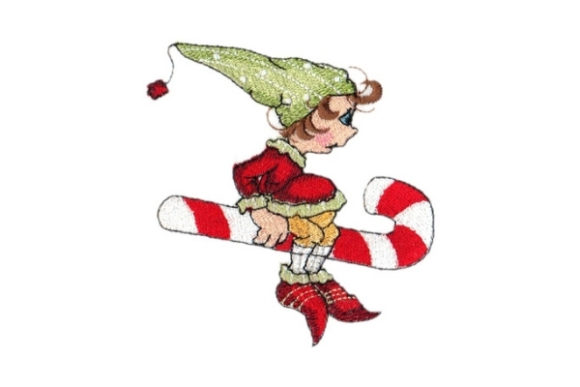
Sassy Candy Cane Elf
First Impressions: Playful, Festive, and Full of Personality
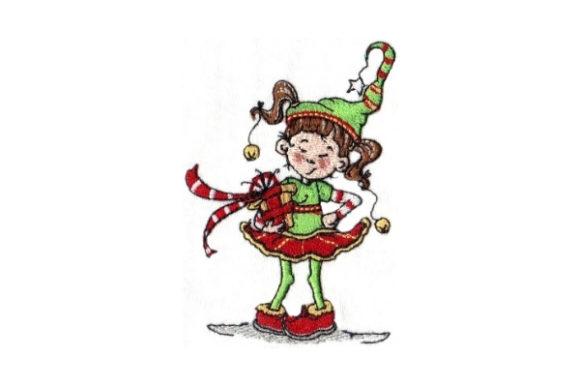
As an embroidery designer who’s tested hundreds of holiday motifs for personalized gift shops and Etsy sellers, the Sassy Candy Cane Elf immediately stands out—not just for its whimsy, but for its thoughtful execution. It’s not overly sweet or cutesy; instead, it balances cheeky charm with clean, confident stitching. The elf’s tilted hat, knowing smirk, and candy cane staff give it a lighthearted confidence that feels refreshingly modern—yet still warmly seasonal. There’s no clutter, no overworked detail, and no visual noise. That’s rare in Christmas embroidery. It reads as handmade without looking amateurish, festive without leaning into cliché. For customers seeking personality-driven gifts—especially new parents, wedding couples, or small shop owners building a signature aesthetic—this design lands with emotional resonance.
Where This Machine Embroidery Design Truly Shines
The Sassy Candy Cane Elf is remarkably versatile across product categories, especially when intentionality guides placement and fabric choice.
- Baby embroidery: Stitched on a soft cotton muslin blanket or organic cotton onesie (with careful stabilizing), it adds joyful warmth to nursery decor—ideal for holiday baby showers or first-Christmas keepsakes.
- Wedding gift: Embroidered on linen pillow covers or monogrammed tea towels, it brings unexpected charm to winter weddings—think “Mr. & Mrs. + Sassy Candy Cane Elf” as a playful yet elegant motif on guest favors.
- Personalized towel & kitchen goods: On medium-weight terry or waffle weave, the design holds crispness well—just avoid high-pile areas near the edges. A single elf centered on a hand towel makes a memorable hostess gift.
- Pillow cover & tote bag: Its balanced proportions scale beautifully from 4” to 6” hoop sizes. On canvas or duck cloth, it reads clearly even at smaller dimensions—perfect for craft fair booths or curated Etsy listings.
- Blanket embroidery & nursery items: When placed on the corner of a quilted receiving blanket or stitched onto a wooden ornament hanger, it becomes a subtle heirloom detail—not loud, but deeply intentional.
Smart Placement Matters: Where to Use With Care
Even charming designs have limits—and respecting them protects your reputation as a trusted maker. The Sassy Candy Cane Elf performs best on stable, medium-weight fabrics. Avoid it on:
- Stretchy baby clothes (like ribbed knit bodysuits) without heavy cutaway stabilizer and reduced stitch density—otherwise, facial details may distort.
- Thick, textured towels where dense satin stitches might sink or blur—test first on a folded edge scrap to assess visibility.
- Curved surfaces like mugs or ornaments unless using specialized hoops or appliqué techniques.
- Dark fabric with light thread without underlay or proper contrast testing—those expressive eyes and candy cane stripes need clarity.
- Products requiring frequent washing (e.g., kids’ aprons)—confirm thread quality and secure back-tacking, especially around the elf’s tiny boots and hat brim.
Why It Elevates Your Handmade Product—Beyond Just Looks
Customers don’t buy embroidery—they buy meaning, memory, and mood. The Sassy Candy Cane Elf delivers all three. Its personality invites storytelling: “This is for my sister who laughs at everything—even burnt cookies.” That emotional hook increases perceived value instantly. For Etsy sellers and small shop owners, it boosts buyer engagement—shoppers linger longer on listings featuring expressive, cohesive designs like this one. In product photography, it photographs beautifully against natural light and neutral backdrops, reducing editing time. And because it avoids dated trends, it supports repeat gifting year after year—no seasonal fatigue. Most importantly, it signals craftsmanship: clean edges, intentional spacing, and balanced stitch density tell buyers you care about quality, not just speed.
Practical Embroidery Notes Before You Stitch
Before committing to customer orders—or uploading to your digital embroidery file library—run these checks:
- Test on scrap fabric that matches your intended product (e.g., terry for towels, brushed cotton for blankets).
- Verify thread color contrast, especially for small features like the elf’s rosy cheeks or candy cane stripes—light thread on dark fabric may require a second pass or underlay.
- Confirm hoop size compatibility—some versions may be optimized for 4x4, others for 5x7. Don’t assume.
- Review stitch density: Overly dense fills can cause puckering on lightweight fabrics. If needed, reduce density slightly in your editing software.
- Choose stabilizer wisely: Medium-weight cutaway for knits, tear-away for stable wovens, and water-soluble for delicate top layers like organza overlays.
- Compare light and dark fabric mockups—a printable mockup helps visualize how the finished product will appear before stitching.
- Inspect small details post-stitch: Check that the elf’s eyes, smile, and cane stripes are fully formed and legible—not lost in thread buildup.
- Confirm commercial licensing before selling finished products—this is essential for Etsy sellers, baby product creators, and wedding gift designers.
A Design That Grows With Your Business
The Sassy Candy Cane Elf isn’t just another Christmas embroidery—it’s a strategic asset. It fits seamlessly into curated collections (think “Holiday Humor” or “Modern Keepsakes”), pairs naturally with monograms or names for true personalization, and supports both physical and digital offerings—whether you’re stitching custom orders or selling the embroidery file itself. For baby product creators, it adds levity to otherwise serene nursery lines. For wedding gift designers, it offers a joyful counterpoint to traditional motifs. And for crafters building a recognizable brand voice? It’s a consistent, ownable expression of warmth and wit. When your customers unwrap a towel, pillow, or blanket embroidered with the Sassy Candy Cane Elf, they’re not just receiving a gift—they’re receiving a moment of delight, carefully stitched and thoughtfully chosen. That’s the power of intentional embroidery.