Reviewing Christian Embroidery Design for Branded Merch
As someone who has spent years testing machine embroidery designs on everything from delicate café aprons to rugged workwear, I have learned that a design either earns its place in a production lineup or it does not. There is rarely a middle ground when you are stitching for small business merchandise. The Christian Embroidery Design featuring the "You Can Sit With Us" Last Supper silhouette immediately caught my attention because it carries a message that is both deeply personal and broadly welcoming. That combination is rare, and when it lands, it can transform a simple embroidered patch into a genuine brand asset.
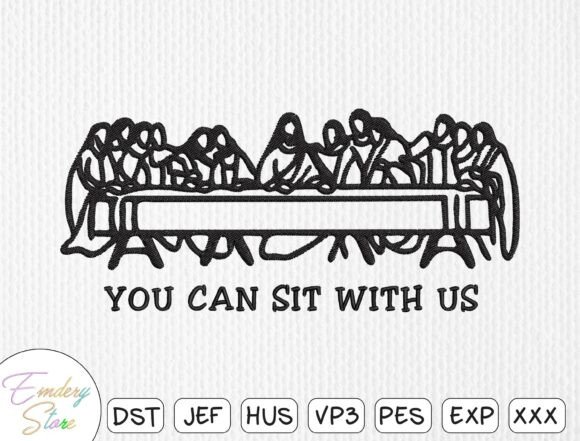
My first impression of this embroidery file is that it leans into a minimalist, modern silhouette style with a rustic undertone. The Last Supper table scene, rendered in a clean, uncluttered outline, feels intentional rather than overly decorative. It reads as professional and warm, the kind of design that a small café, boutique, or handmade shop could confidently place on staff uniforms, tote bags, or customer-facing merchandise without it feeling like overt religious signage. The phrase "You Can Sit With Us" softens the imagery and makes it about inclusion, which is exactly the tone many small business owners want for their brand identity.
From a production standpoint, the silhouette approach is a smart choice for machine embroidery. Designs that rely on heavy fill stitching or intricate internal details often struggle on textured fabric or at smaller sizes. A well-drawn silhouette, however, tends to hold its shape beautifully across a range of hoop sizes and fabric types. That said, I always recommend testing any embroidery file at the exact patch size you intend to use before committing to a full production run.
First Impressions and Visual Personality
When I opened the preview of this digital embroidery file, the first thing I noticed was the balance between the seated figures and the table. In many Last Supper-inspired designs, the composition can feel crowded or overly detailed, which leads to stitching problems at smaller dimensions. This version appears to prioritize clarity over complexity, which is a hallmark of a design that was created with real embroidery use in mind. The silhouette reads instantly, even from a distance, which is critical for cap embroidery and chest logo placements.
The overall personality of the Christian Embroidery Design sits somewhere between elegant and approachable. It does not feel overly formal, which makes it suitable for a wide range of business types. I could see this working on a bakery apron just as easily as on a florist's work shirt or a pet brand's canvas tote. The message of welcome embedded in the phrase gives it a conversational warmth that many purely decorative religious designs lack.
How This Design Performs in Real Business Use
Small business owners and Etsy sellers often ask me whether a design is versatile enough to justify the investment. With this embroidery file, the answer leans heavily toward yes. The silhouette format makes it adaptable for embroidered patches, which are consistently popular in the handmade product space. A finished patch version of this design could be sewn onto denim jackets, canvas bags, or even sold as a standalone product in a craft business lineup.
For staff uniforms and aprons, the design works well as a chest logo accent or a sleeve detail. I have stitched similar silhouette designs onto cotton aprons for a small café, and the result was consistently clean and professional. The key is to match the thread color to the brand palette. A warm taupe, deep charcoal, or even a muted gold thread on a dark apron creates a premium, understated look that customers notice.
Cap embroidery is another strong use case. The curved front panel of a cap can distort designs that are too wide or too detailed. A compact silhouette like this one, however, typically fits well within standard cap embroidery boundaries. I recommend checking the specific hoop size requirements and testing the stitch density on a curved surface before finalizing a cap order. The last thing you want is puckering around the edges of a design that should feel crisp and intentional.
Tote bag design is perhaps the most forgiving application. The flat, stable surface of a canvas tote allows the embroidery file to shine with minimal adjustment. A centered placement of the Christian Embroidery Design on a natural cotton tote bag, paired with a simple brand tag or shop name, creates a product that feels like a meaningful customer gift rather than disposable merch.
Where the Design Should Be Used Carefully
No embroidery design is universally perfect, and this one requires thoughtful application in certain scenarios. Small patch sizes, particularly those under two inches wide, may cause the finer silhouette details to blur or lose definition. If your branded merchandise plan involves tiny lapel pins or miniature patches, you will want to test the embroidery file at that reduced scale first. The table and figures could become difficult to distinguish if the stitch density is not adjusted appropriately.
Cap fronts, as mentioned, demand attention to curvature. A design that is too wide will wrap awkwardly around the side seams of a structured cap. I suggest measuring the flat embroidery area of your specific cap style and comparing it to the digitized dimensions of the design. If the file is not pre-sized for caps, a slight resize may be necessary, but always consult the digitizer's notes on scaling limits before making changes.
High stitch density is another factor to monitor. Silhouette designs can sometimes pack more stitches into a small area than the fabric can comfortably support. On lightweight or loosely woven fabrics, this can lead to pulling, puckering, or even fabric damage after repeated washing. Use a proper stabilizer and consider a test wash cycle on a sample piece before launching the finished product to customers.
Dark uniforms and textured fabrics, such as heavy canvas or fleece, require careful thread color selection. A design that looks bold on a light cotton swatch can disappear on a black polo shirt if the thread lacks contrast. I always test in black and white first to see whether the design holds its visual impact without relying on color nuance. This step alone has saved me from ordering dozens of unusable embroidered pieces.
Brand Identity and Customer Trust
When a small business places an embroidered design on their merchandise, they are not just decorating fabric. They are building a visual identity that customers learn to recognize and trust. The Christian Embroidery Design carries a message that directly shapes how a brand is perceived. "You Can Sit With Us" signals openness, community, and a deliberate choice to include rather than exclude. For a business that wants to position itself as welcoming and values-driven, this design becomes more than a logo accent. It becomes a statement of brand identity.
Customer recognition grows when a design is used consistently across multiple touchpoints. A café that embroiders this design on staff aprons, prints it on loyalty cards, and stitches it onto tote bags for retail sale creates a cohesive visual system. The embroidery file becomes a unifying element that ties the brand experience together. That consistency increases perceived professionalism and product value, which in turn supports higher pricing and repeat purchases.
Handmade presentation matters deeply in the small business and Etsy seller space. A product that features a thoughtfully chosen embroidery design feels more intentional and crafted than one with a generic or off-the-shelf logo. The silhouette style of this particular design lends itself well to the handmade aesthetic without looking amateurish. It strikes a balance that many makers and crafters actively seek.
Practical Embroidery Designer Notes
Over the years, I have developed a set of practical habits that help me avoid costly mistakes when working with a new embroidery file. I apply these same steps to the Christian Embroidery Design before approving it for any commercial embroidery project.
First, test the design in black thread on white fabric. This removes the distraction of color and reveals whether the silhouette reads clearly at the intended size. If the shapes feel ambiguous or the spacing between figures blurs, the design may need to be used at a larger scale or with a lighter thread density.
Second, check the design at small patch size. What looks good at four inches may not hold up at two inches. I create a quick stitch sample on a scrap of the actual fabric I plan to use, with the same stabilizer, and examine it under natural light. This gives me a realistic preview of the finished product before any client sees it.
Third, review thread color contrast. A design that is entirely one color relies heavily on the contrast between the thread and the fabric. I test at least three thread and fabric combinations before settling on a final palette. A tonal approach, using a thread slightly darker than the fabric, can create a subtle, premium look. A high-contrast approach, such as white thread on black canvas, makes the design feel bolder and more graphic.
Fourth, inspect the spacing between design elements. Silhouette designs with multiple figures, like this Last Supper scene, need enough negative space to prevent the shapes from merging during stitching. If the digitized file does not account for fabric push and pull, the figures can lose their individual definition. A quick stitch test reveals whether the spacing holds up on your chosen fabric texture.
Fifth, confirm the hoop size. Before purchasing or downloading the embroidery file, make sure the design dimensions fit within the hoop sizes your machine supports. This is especially important for single-needle machines with limited embroidery fields. If the design requires a larger hoop than you own, you may need to explore splitting the file or investing in a multi-position hoop system.
Sixth, create a mockup for client approval. I use a printable mockup that shows the design placed on the actual product, whether it is a cap, apron, tote bag, or work shirt. This helps clients visualize the scale and placement, and it prevents misunderstandings about the finished product. A client who approves a mockup is far less likely to request changes after production begins.
Seventh, compare the design beside other design assets in your brand lineup. Does it feel cohesive with your existing logo, typography, and color palette? A design that looks beautiful in isolation can clash with other brand elements if not evaluated in context. I lay out all my digital embroidery files side by side to ensure visual consistency across the entire merchandise collection.
Finally, confirm commercial licensing before business use. Many embroidery files are sold for personal use only, and using them on merchandise for sale without proper licensing can create legal and ethical issues. Always check the terms provided by the digitizer or marketplace before stitching the design onto products you intend to sell.
Fabric, Stabilizer, and Washing Considerations
The longevity of an embroidered design depends heavily on the fabric and stabilizer combination. For the Christian Embroidery Design used on aprons, I recommend a medium-weight cutaway stabilizer on cotton or cotton-blend fabrics. This provides enough support for the silhouette stitching without adding excessive stiffness. For tote bags made from heavy canvas, a tear-away stabilizer often works well, but I still test to ensure the design does not distort when the bag is loaded with weight.
Frequent washing is a reality for staff uniforms and work shirts. Embroidery that is not properly stabilized can pucker, fray, or lose its shape after multiple wash cycles. I always run a test piece through at least five wash and dry cycles before approving a design for commercial use. If the stitching shows any signs of deterioration, I adjust the stabilizer, thread tension, or stitch density and test again.
Thread choice also affects washability. Polyester embroidery thread generally holds up better to frequent washing and exposure to heat than rayon thread. For a design that will live on restaurant aprons or workwear, I prefer polyester thread in a matte finish to maintain a professional look over time.
Final Thoughts on Business Versatility
The Christian Embroidery Design offers a compelling blend of meaningful imagery and practical stitchability. Its minimalist silhouette format makes it suitable for a wide range of small business merchandise applications, from embroidered patches and cap embroidery to apron accents and tote bag branding. The welcoming message aligns with brands that prioritize community, inclusion, and values-driven identity, which can strengthen customer engagement and loyalty.
As with any embroidery file, the key to success lies in testing. Check the stitch density, thread color contrast, hoop size compatibility, and fabric performance before ordering bulk production. Create a mockup, wash a sample, and evaluate the design alongside your other brand assets. When those steps are followed, this design has the potential to become a signature piece in a small business merchandise lineup, one that customers recognize and respond to on a personal level.