Holly Quilt Block: Festive, Farmhouse-Ready & Fair-Proof
First Impression: Warm, Timeless, and Booth-Ready
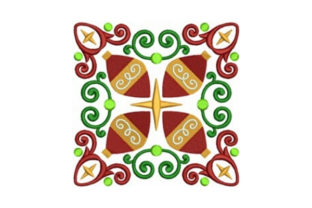
As an embroidery designer who’s prepped over 200 craft fair booths—from snowy Vermont markets to sun-drenched Southern pop-ups—I instantly recognize what Holly Quilt Block delivers: a soft, nostalgic Christmas charm with quiet confidence. It’s not flashy or cartoonish—it leans into farmhouse elegance with just enough botanical detail to feel handmade, not mass-produced. The name alone signals tradition, comfort, and seasonal warmth—exactly the emotional hook that makes shoppers pause at your table, pick up a tea towel, and say, “Oh, I *need* this for my kitchen.”
Where Holly Quilt Block Shines on Craft Fair Products
This isn’t a one-trick design. Its balanced scale and clean quilting-inspired structure let it adapt beautifully across your lineup:
- Tote bag design: Centered on a natural canvas tote, Holly Quilt Block reads clearly from three feet away—no squinting, no confusion. Its moderate density holds up under daily use without puckering.
- Apron embroidery: Positioned above the pocket or centered on the bib, it adds heirloom appeal without overwhelming the garment’s function. Customers associate this look with thoughtful gifting—not just utility.
- Tea towel embroidery: On linen-cotton blends, the holly motif pops with subtle texture contrast. It photographs exceptionally well for Etsy listings, especially when styled with mugs and cinnamon sticks.
- Embroidered patch: At 3–4 inches wide, it scales down gracefully—ideal for iron-on or sew-on applications on denim jackets, market bags, or kids’ backpacks.
- Pillow cover & pouch embroidery: Works as both a focal point (centered front) and a refined accent (lower corner). Its symmetry gives instant visual rest—critical in a crowded booth where clutter competes for attention.
What Makes It Sell—Beyond the Stitch
Holly Quilt Block succeeds because it bridges nostalgia and modern minimalism. It doesn’t shout “CHRISTMAS!”—it whispers “cozy holiday moments.” That subtlety builds perceived value: shoppers see it on a handmade product and assume care, intention, and quality—not just seasonal urgency. For Etsy sellers and small shop owners, that translates directly into higher conversion and repeat customers who return each November for your “quiet holiday collection.”
It also strengthens brand consistency. Whether you’re stitching it on organic cotton aprons or recycled polyester pouches, Holly Quilt Block maintains its voice—warm, grounded, unhurried. That cohesion makes your booth feel curated, not scattered.
Production Realities: What You Must Test Before the Fair
Even lovely designs can stumble in production. Here’s what I check—every time—with Holly Quilt Block:
- Stitch density & fabric texture: On thick, napped towels or textured linen, dense leaf areas may sink or blur. Always test with your exact fabric—and the stabilizer you plan to use (cutaway works best for heavy items; tear-away suffices for lightweight cotton).
- Small details on curved surfaces: Caps and pouches demand careful hooping. If Holly Quilt Block includes fine holly berries or delicate stem lines, those may compress or distort on rounded seams. A real mockup on a baseball cap is non-negotiable.
- Thread contrast on dark fabric: Red thread on black twill? Gorgeous—but only if the machine embroidery design has sufficient fill coverage. Low-density areas may show fabric through. Check your file’s stitch map before committing to 50 dark fabric pieces.
- Clarity at smaller sizes: As a patch or pocket accent, avoid shrinking below 2.5". Tiny stems or overlapping leaves risk merging. If your digital embroidery file offers multiple sizes, confirm the smallest version retains legibility.
- Hoop size & spacing: Does Holly Quilt Block fit comfortably in your most-used hoop? Can you nest two side-by-side on a tea towel without re-hooping? Efficient batch production depends on this.
Photography, Listings & Digital Strategy
This design excels in visual storytelling. Its balanced composition and festive-but-refined mood make it ideal for printable mockups—especially flat lays with pine sprigs, ceramic mugs, or wrapped gifts. For Etsy sellers, pair it with warm natural light and neutral backdrops to emphasize craftsmanship, not just holiday hype.
When writing listings, lean into its versatility: “Works equally well on a rustic market bag or a minimalist pillow cover.” That signals sophistication to buyers who scroll past generic “Christmas embroidery” tags.
Designer-to-Designer Notes Before You Stitch
Before cutting your first fabric piece, do these six things:
- Run a test on scrap fabric—same type, same color, same stabilizer you’ll use in production.
- Verify thread colors match your intended palette. Does the holly green read true, or does it shift olive on cream cotton?
- Review spacing between elements. Are stems too close to berries? Will that cause thread breaks or nesting issues at speed?
- Confirm hoop size compatibility—especially if you’re using multi-needle or commercial machines.
- Inspect stitch density in tight corners. High density + tight curves = potential puckering on lightweight fabrics.
- Double-check commercial licensing terms. Even if it’s labeled “for personal use,” many designers offer upgraded licenses for finished products—you’ll need that for craft fair sales.
Final Thought: Why Holly Quilt Block Belongs in Your Holiday Lineup
In a sea of glitter, snowmen, and bold typography, Holly Quilt Block stands out by being quietly confident. It doesn’t chase trends—it honors them. It sells because it feels like something made *for* people, not *at* them. Whether stitched on a $28 tea towel or a $98 pillow cover, it elevates your craft fair product with dignity, warmth, and unmistakable handmade quality. Just remember: its magic lives in the details, the testing, and the intention behind every stitch. Get it right—and your booth won’t just sell holly. It’ll sell memories.